The Summer Squeeze: Why High-Energy Dogs Are Running Out of Room in South Wales
The Summer Squeeze: Why High-Energy Dogs Are Running Out of Room in South Wales
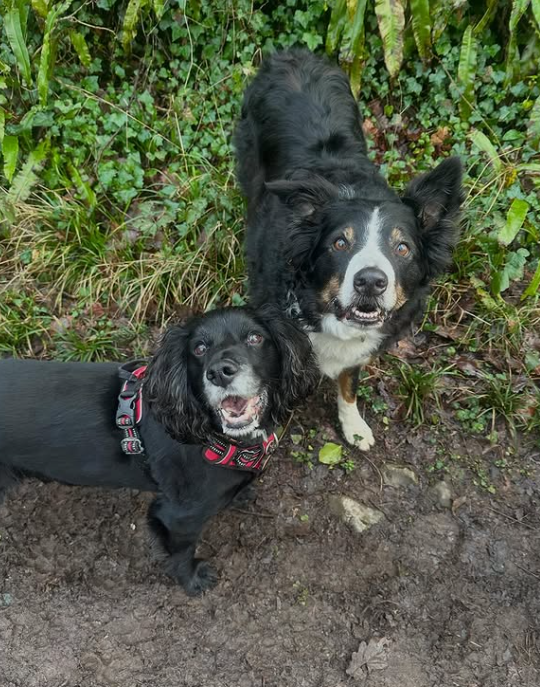
If you share your home with a Spaniel, a Collie, a Vizsla, a Mali or any other dog whose favourite hobby is moving fast in a straight line, the 1st of May has just made your life noticeably harder. Across South Wales, councils have once again rolled out their annual seasonal dog bans, and the practical effect is the same every year — some of the most usable, safe, off-lead exercise spaces in the region close their gates to dogs until the end of September.
For owners of laid-back lap dogs, this is a minor inconvenience. For owners of high-drive working breeds, it is a genuine welfare problem. Five months is a long time to ask a dog built for ten miles a day to make do with a pavement loop around the block.
Which Beaches Are Off-Limits This Summer?
The restrictions vary by council, but the dates are remarkably consistent: 1 May to 30 September. Here is where the squeeze is being felt hardest in our patch of South Wales.
Swansea and the Gower
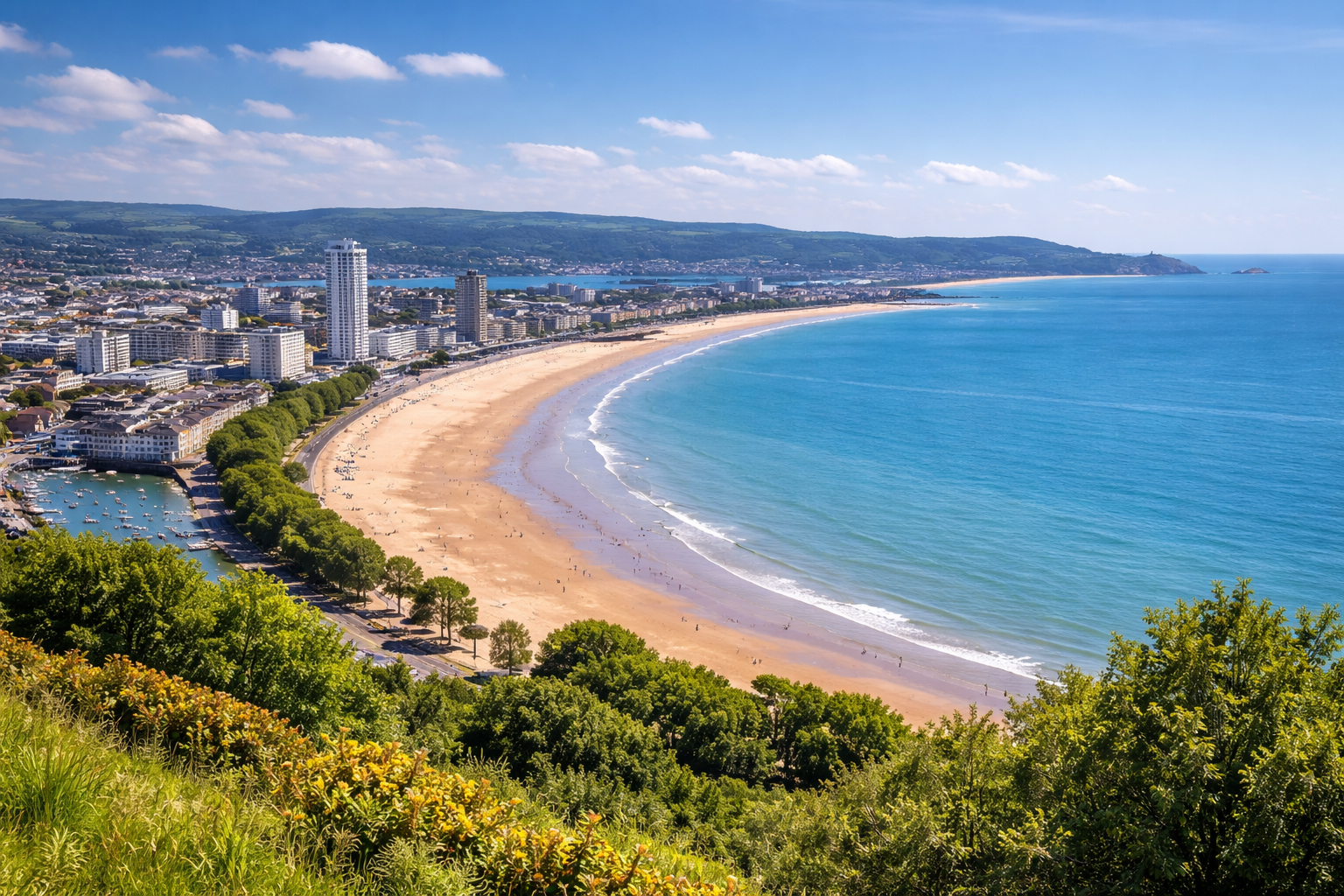
Swansea Council's annual seasonal restriction means dogs are banned outright from a list of the area's busiest and most popular beaches between 1 May and 30 September. The list includes Bracelet Bay, Limeslade Bay, Rotherslade Bay, Langland Bay, Caswell Bay and Port Eynon — effectively the entire eastern Gower run that most Mumbles-based dog owners would consider their default option. On top of that, dogs must be kept on a lead along the full Swansea Bay promenade, from the River Tawe right through to the Knab Rock car park at Mumbles. Stepping onto a banned beach with a dog in tow risks a fixed penalty notice.
Vale of Glamorgan
The Vale's annual ban returned on 1 May and runs through to 30 September, covering several of the county's most popular beaches. Penalties here are particularly steep — anyone caught walking a dog on a banned beach faces a fine of up to £500. The one piece of good news this season is that Ogmore-by-Sea has been spared during the 2026 review period while the Public Space Protection Order is being consulted on, but the rest of the Vale's restricted beaches remain firmly closed to dogs.
Bridgend County Borough
Bridgend mirrors its neighbours. From 1 May to 30 September, dogs are excluded from a number of the borough's most accessible beaches, leaving a patchwork of permitted spots that often require a longer drive and earlier starts to avoid the crowds.
Why This Matters More for High-Energy Dogs
The seasonal ban is not just an emotional inconvenience. It changes the physical reality of how a dog gets exercised, and that has knock-on effects that any working-breed owner will recognise.
Beaches are one of the very few places where a fit, fast dog can sprint flat-out for sustained periods on a forgiving surface, in a contained space, away from livestock, traffic and the off-lead bans that apply on most farmland. Sand absorbs impact in a way that pavements, forestry tracks and field edges simply cannot. For older dogs with stiff joints, for young dogs whose growth plates are still closing, and for athletic breeds prone to repetitive-strain injuries, the loss of soft, level running surface is a meaningful one.
Just as importantly, beaches give dogs the kind of decompressive, sniffy, varied environment that helps regulate their nervous systems. A high-arousal Collie chasing the same ball down the same patch of grass for the hundredth time is not really being exercised — they are being wound up. Genuine enrichment requires novelty, scent, distance and freedom of movement, and South Wales beaches deliver all four.
When that option disappears, owners often default to two patterns, both of which cause problems. The first is over-using the same handful of fields and parks, which leads to staleness, reactive behaviour and territorial flashpoints with other regulars. The second is simply walking less, which for a dog bred to herd, retrieve or work all day, is a recipe for chewed skirting boards, anxious pacing and frustrated barking by week three.
The Permitted Beaches Aren't a Real Substitute
It's true that not every beach is closed. Year-round dog-friendly options exist — Cwm Nash, Nash Point, Summerhouse Bay, The Leys, Fontygary, Porthkerry, Jackson Bay and St Mary's Well Bay all stay open in the Vale, and certain stretches of the Gower remain accessible. But these tend to be either less convenient to reach, smaller in usable space, or significantly more crowded once they become the only game in town. By June, the dog-friendly remainders are doing the work of a full coastline, and high-energy dogs that need space to truly stretch out are competing for it with everyone else's Labrador and Cockapoo.
That overcrowding has its own consequences. More dogs in a smaller space means more recall failures, more lead-on time, more on-lead frustration, and for nervous or reactive dogs, fewer genuinely useful outings. The very dogs who most need a proper run are the ones least able to get one when the available beach footprint shrinks by 70 per cent overnight.
What Can Owners Actually Do About It?
There are practical workarounds, and they are worth knowing. Forestry Commission tracks at places like Afan Forest, Penllergaer Woods and the Brecon Beacons foothills offer good off-lead options if your recall is solid. River walks along the Tawe, the Loughor estuary and the Neath canal give dogs water access without the beach restrictions. Early-morning and late-evening visits to the still-permitted beaches let you avoid the worst of the crowds. And brain work — scent games, structured trick training, mantrailing, flirt-pole work in the garden — can carry a serious chunk of the load that the beach used to carry, often more efficiently than another loop of the same field.
But all of that depends on the owner having time, energy and headspace to do it properly five days a week. Most don't. Most are already working full days, juggling family, and watching their high-drive dog physically deflate on the lounge floor by Tuesday afternoon.
This Is Where Pip's Adventure Walks Comes In
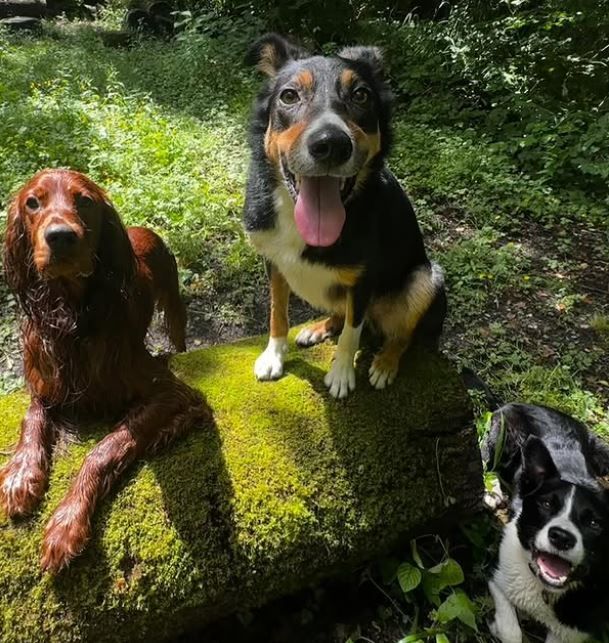
This is exactly the gap Pip's Adventure Walks was built to fill. While the council signs go up on the beaches, our walks are designed specifically around what high-energy dogs in Swansea, Gorseinon, Gowerton and Mumbles actually need during the months when their usual exercise options are taken away from them.
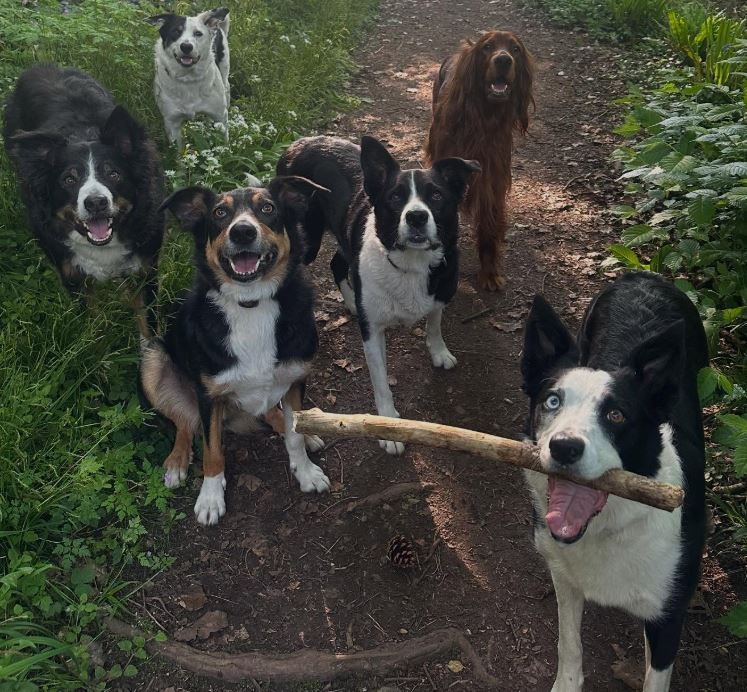
Our standard adventure walks run for two full hours in the morning — not the rushed half-hour pavement plod that most dog walking services class as a session. Group sizes are kept small, with a hard cap of six dogs and most walks running with around four, so every dog gets attention, recall practice and the chance to socialise without being lost in a pack. We rotate routes deliberately to keep the sniff-and-scent work varied: woodland one day, river the next, off-lead fields after that. Brain training games, trick work and structured challenges are built into every outing because a tired dog is the one whose brain has been used as well as their legs.
Every dog travels in a secure, professionally fitted van with individual crates, gets their muddy paws cleaned off before they come back through your front door, and goes home with a proper run behind them. The service is run by a qualified pet first aider with hands-on experience of working breeds, so we know what a Spaniel actually needs versus what a Frenchie actually needs — and we plan accordingly.
If your dog is climbing the walls because their favourite Gower beach has just closed for five months, talk to us. Visit pipsadventurewalks.co.uk, drop us a message, or find us on Facebook to book a meet-and-greet. We have limited group walk slots each week and they tend to fill quickly once the seasonal ban kicks in — so the sooner you get in touch, the sooner your dog gets back to being properly, happily exhausted.
The beaches will reopen on 1 October. Until then, your dog doesn't have to wait it out on the sofa.