Top 10 dog walks in Swansea and Gower for high energy dogs

24 February 2026

The top 10 places to walk high energy dogs in Swansea and Gower

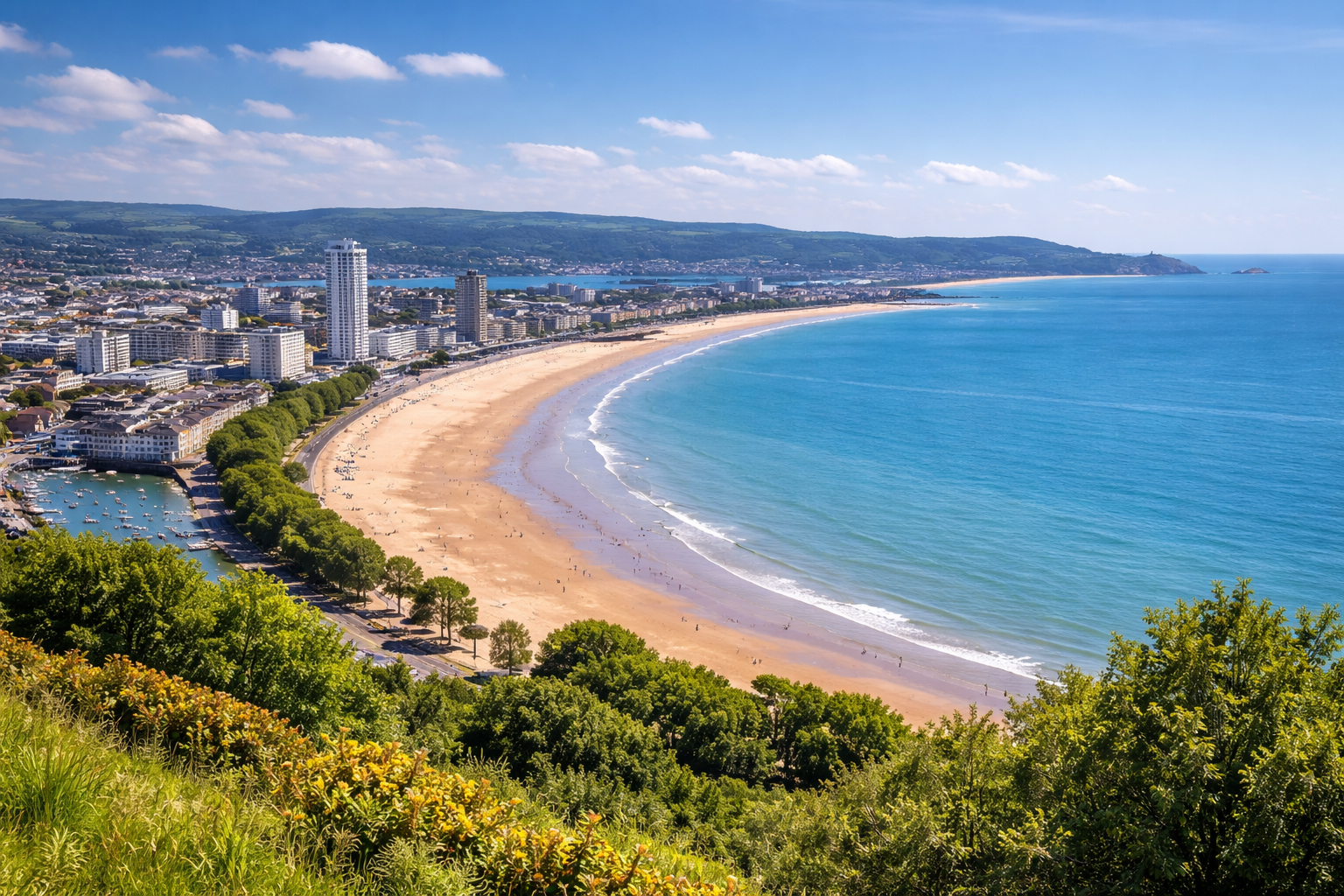
Swansea and the Gower Peninsula are packed with big horizon walks, woodland trails, and beaches that give energetic dogs the space to move and explore. Before you head out, remember that beach dog rules can change seasonally. In Swansea, from 1 May to 30 September, dogs are only allowed on specific dog friendly beaches, so always check signage when you arrive.

Below are ten brilliant options for high energy dogs, with a mix of on lead and off lead potential depending on the time of year, how busy it is, and your dog’s recall.


1. Rhossili Bay

A huge open beach with epic views, great for a long leg stretch and sniffing adventures. Rhossili is widely recognised as dog friendly year round, making it a reliable choice whatever the season.

Best for: off lead running when quiet, long on lead training walks when busy
Top tip: bring water and be mindful of tides and wildlife


2. Three Cliffs Bay

One of Gower’s most iconic walks, with sand, dunes, and routes from Parkmill that add extra distance for energetic dogs. It is also often listed as dog friendly year round, but do still follow local signage and good manners around other beach users.

Best for: varied terrain, building fitness, recall practice away from crowds
Top tip: dunes can be steep, so pace yourself and take breaks


3. Clyne Valley Woods

A convenient Swansea classic for woodland mileage, shaded paths, and a good change of scene for dogs that love to explore. There are circular routes with manageable elevation, which is ideal when you want steady exercise without too much road walking.

Best for: on lead training, calm focus work, sniff heavy enrichment
Top tip: take a long line if your dog needs freedom but recall is a work in progress


4. Penllergare Valley Woods

Woodland trails, waterfalls, and plenty of natural interest for busy brains. A great muddy adventure in cooler months and a strong option when you want something different from the beach.

Best for: mental stimulation, steady pace endurance walks
Top tip: expect mud, pack a towel and rinse kit for the car


5. Lliw Reservoir

A more peaceful, scenic option with longer circular walks that suit dogs who need consistent movement without heavy crowds. Great for stamina building and calmer, structured outings.

Best for: long steady mileage, lead manners, calmer adventure days
Top tip: practise check ins and loose lead walking on the more open stretches


6. Oxwich Bay and dunes

A long sandy beach backed by dunes, giving you space for distance walking and plenty of sniffing. Like many local beaches, access rules can vary by season, so check on arrival and keep your dog under control around families and wildlife.

Best for: high energy dogs that love sand runs and big open views
Top tip: early mornings are best for space and calmer off lead play


7. Port Eynon and Horton beach walk

A brilliant long coastal stretch with options to extend your route. Be aware that some areas have seasonal restrictions, with certain sections remaining dog friendly, so plan your walk based on time of year and signage.

Best for: longer beach mileage, training in a stimulating environment
Top tip: keep treats handy for recall around distractions


8. Limeslade to Pwll Du coastal path

A proper headland workout with climbs, views, and a rewarding bay at the end. This is a great choice for dogs that need a more challenging route than flat beach walking.

Best for: fitness building, energetic dogs that thrive on hills
Top tip: keep a lead ready near cliff edges and around other walkers


9. Llanmadoc and Llangennith hill routes

If your dog needs a real leg burner, the hill walks around this area deliver. AllTrails lists routes here with some of the bigger elevation gains in the Gower National Landscape, which can be ideal for dogs that need to work.

Best for: off the beaten track adventure, hill stamina
Top tip: stick to paths and keep dogs close during lambing season


10. Clyne Gardens and nearby trails

A lovely option to combine gardens, woodland edges, and nearby routes, especially if you want variety and a structured walk where training focus matters.

Best for: on lead training, socialisation at a distance, calmer decompression walks
Top tip: go at quieter times if your dog gets over excited around people and dogs


On lead and off lead guidance for high energy dogs

Even in the best walking spots, off lead freedom only works when it is safe and respectful. If your dog’s recall is not reliable yet, use a long line to give them room while keeping everyone safe. For beaches, always follow local council rules and seasonal restrictions.


Call to action

If you would like your dog to enjoy these kinds of adventures regularly, with brain training and structured enrichment built in, Pip’s Adventure Walks offers longer adventure walks designed for high energy dogs across Swansea and Gower.

6 June 2026
Most owners picture heatstroke as something that happens to a dog left in a hot car. It is a fair worry, but it is not where the real danger lies for active dogs. UK research from the Royal Veterinary College found that exercise, not hot cars, triggered around three-quarters of the heat-related illness cases seen by vets, and that exertion-driven heatstroke was just as likely to be fatal as the hot-car kind. For a high-energy dog that lives to run, swim and chase, summer in Swansea and on Gower carries a hidden risk that has nothing to do with being shut indoors. As a dog walker who specialises in longer adventure walks for high-drive dogs, and as a qualified pet first aider, this is the topic I find owners are least prepared for. So here is a clear, locally relevant guide to keeping your dog safe and active through the warm months, and exactly what to do if things go wrong.  Why high-energy dogs are the most at risk The dogs that struggle most in the heat are often the fittest, happiest, most enthusiastic ones. Spaniels, collies, retrievers, working crosses and other high-drive breeds share a trait that becomes dangerous in warm weather: they will not stop themselves. A ball-obsessed Springer will keep retrieving long after its body is overheating, because the drive to chase overrides the instinct to rest. Dogs simply are not good judges of their own limits, and that is precisely why exertional heatstroke catches so many active dogs out. The research backs this up. The same UK studies found that younger dogs and male dogs were more likely to develop heatstroke triggered by exercise, and that English Springer Spaniels appeared among the higher-risk breeds alongside flat-faced breeds such as Bulldogs and French Bulldogs. In other words, the typical adventure-walk dog is exactly the profile that needs careful management when temperatures climb. It does not need to be a heatwave One of the biggest misconceptions is that heatstroke only happens on scorching days. Exertional heat illness can occur in fairly ordinary British temperatures if a dog is working hard, especially when the air is humid, there is little shade, or the dog is unfit or carrying extra weight. A muggy 20°C morning chasing a ball across an open field can be more dangerous than a still 24°C stroll in woodland shade. The trigger is the combination of effort and conditions, not the thermometer alone. How hot is too hot to walk your dog? Vets commonly use a simple risk scale based on air temperature. Up to around 19°C is generally considered safe for most dogs. From 20 to 23°C the risk becomes moderate and you should take care with very active, very large, flat-faced, overweight, young or older dogs. At 24°C and above the risk rises sharply for all dogs, and once temperatures reach the high twenties and beyond, hard exercise becomes genuinely dangerous and is best avoided altogether. Treat these figures as a guide rather than a hard rule. Humidity, direct sun, lack of shade and your individual dog's fitness all shift the line. If you are unsure, the sensible approach is to assume it is hotter than the number suggests and to dial the intensity down. The seven-second pavement test Tarmac and paving can reach temperatures far higher than the surrounding air and can burn paw pads quickly. Before you set off, press the back of your hand firmly to the ground for seven seconds. If it is too hot to hold comfortably, it is too hot for your dog's paws. On the promenade at Mumbles or any sun-baked path, this single check can save your dog a painful injury. Spotting the warning signs early Catching heat illness in its earliest stage is what saves lives, because the condition escalates fast. The first sign is usually heavy, relentless panting that does not settle when the dog pauses. As things worsen you may notice very red gums and tongue, thick or stringy drool, a dog that is slowing down, lagging behind, wobbling or seeming disoriented, and a reluctance to carry on that is out of character for an otherwise keen dog. More serious signs include vomiting or diarrhoea, which may contain blood, collapse, glazed eyes, and in severe cases seizures or loss of consciousness. If your dog reaches this stage it is a life-threatening emergency. The crucial point is not to wait for the dramatic symptoms. The moment a working dog stops being interested in the very thing it loves, treat it as a red flag and stop. First aid: cool first, transport second This is the part where advice has changed, and where out-of-date information still does real harm. The Royal Veterinary College now urges owners to "cool first, transport second." Studies found that only a minority of overheated dogs arriving at the vet had been cooled correctly beforehand, and that many owners were still relying on outdated methods such as draping a wet towel over the dog, which traps heat rather than releasing it. If your dog is overheating, get it out of the sun and into shade or a breeze straight away, and offer small amounts of cool water to drink. Then cool the body actively. For a young, otherwise healthy dog, the most effective method is pouring or immersing it in cool to cold water. The old belief that cold water causes shock has been overturned by the research; for a dangerously hot dog, rapid cooling is what matters. Use whatever water is available, as long as it is cooler than the dog. For older dogs or those with health problems, a gentler approach of pouring on cool water while a fan or breeze moves air over the wet coat is preferred. Keep cooling until the dog's breathing begins to settle, then call your vet and take your dog in, continuing to cool on the way if you can. Early, aggressive cooling before the journey gives your dog the best chance of a full recovery. Walking safely through a Swansea and Gower summer The good news is that high-energy dogs can stay active and happy all summer with a few sensible adjustments. The simplest is timing. Early morning and later evening walks avoid the worst of the heat and the hottest ground, which is why my main adventure walks run in the mornings. Through the warmest spells, the early start matters more than ever. Choosing the right location helps just as much. Shaded woodland trails and routes with safe, accessible water give a dog the chance to cool down naturally, which is far better in the heat than an exposed open field or a sunny beach with no shelter. Gower offers some wonderful shaded valleys and woodland walks for exactly this reason. Always carry fresh water and take regular drink breaks, something I build into every walk as standard, and bring water even when you think the walk is short. Swap some miles for brain work When it is genuinely too hot to exercise hard, mental stimulation is your best friend. A high-energy dog does not only need to move its body; it needs to use its mind, and a session of trick training, scent games or puzzle work tires a clever dog out without raising its temperature to dangerous levels. On hot days, replacing part of the physical walk with brain training keeps a high-drive dog satisfied and calm while keeping it safe. It is one of the reasons I combine adventure walks with brain games throughout the year, and it comes into its own in summer. Know your own dog Finally, remember that fitness and acclimatisation matter. A dog that has not yet adjusted to warmer weather is more vulnerable, and it takes a couple of weeks of gradual exposure for a dog to begin adapting to the heat. Build up activity sensibly at the start of a warm spell rather than going straight into a long, hard session on the first hot day of the year. Overweight dogs, flat-faced breeds, puppies and older dogs all need extra caution and a shorter, gentler outing. Active and safe all summer High-energy dogs do not need to spend summer indoors and bored. They need an approach that respects how the heat affects a hard-working body: earlier walks, shaded routes with water, honest judgement about when to ease off, and a switch to mental enrichment when the temperature climbs. Done well, your dog gets a brilliant, busy summer without ever being put at risk. If you would rather your dog's summer walks were handled by someone who plans around the heat, carries water as standard, walks in small groups in the cooler part of the day and is trained in canine first aid, that is exactly what Pip's Adventure Walks provides across Swansea, Gorseinon, Gowerton, Mumbles and Gower. Get in touch to arrange a free meet-and-greet and keep your high-energy dog safe and happy this summer.
2 April 2026
Off Lead Dog Walking Swansea and Gower | Safety and Recall Tips
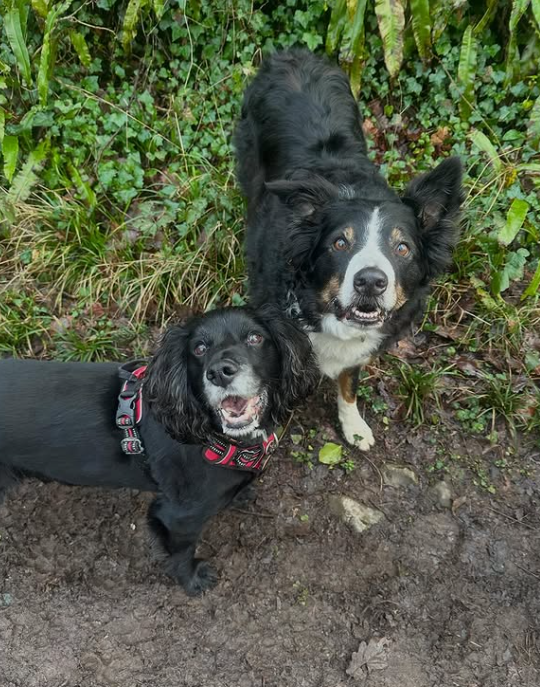
Two dogs looking upwards. One is black and white, the other black. Both have happy expressions, standing outdoors.
17 February 2026
High energy dogs often have high intelligence too
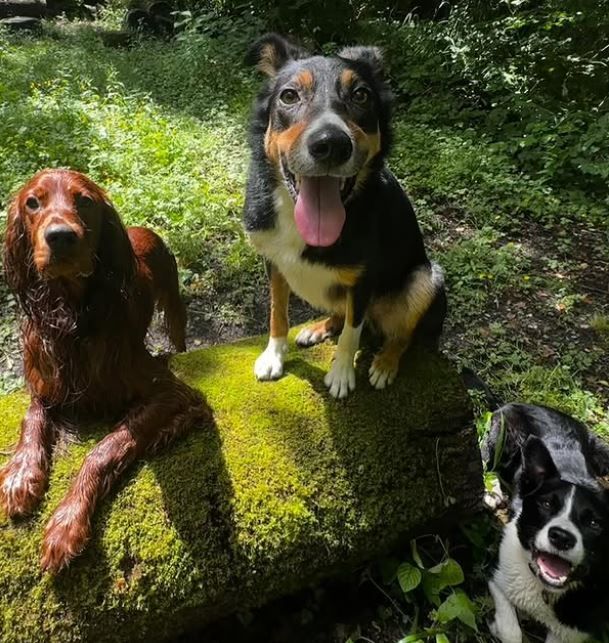
Three dogs posing on a mossy rock in a forest. One is brown, one is black and tan, and the other is black and white.
3 February 2026
How Dogs Changed My Life: My Journey Into a Life With Paws
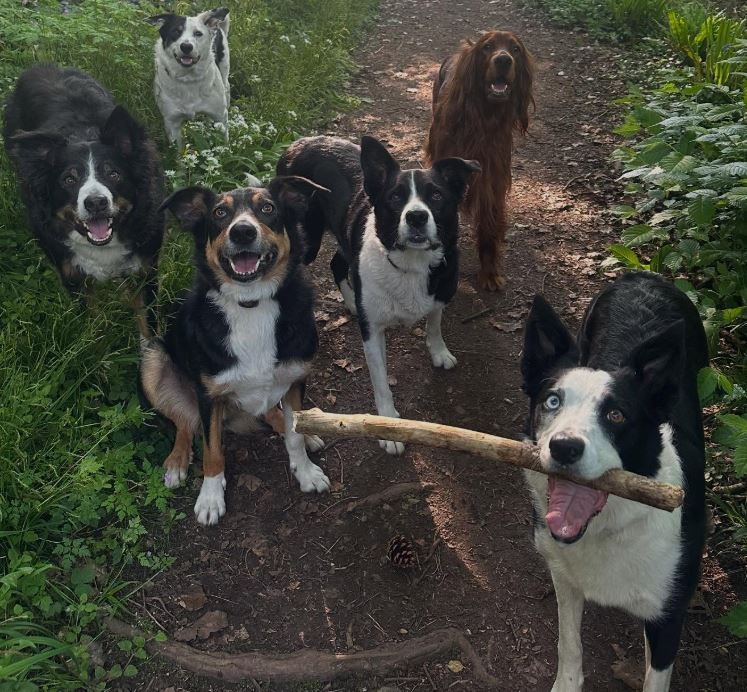
Group of dogs on a path. Mostly black and white, one red. One dog holds a stick, many smiling.
30 January 2026
Discover why longer walks and brain training help high energy dogs in Swansea. Safe group sizes, van collection, photos, and home from home boarding.